News
The New Basque Cuisine celebrates its heritage at Gastronomika: creative freedom and team spirit
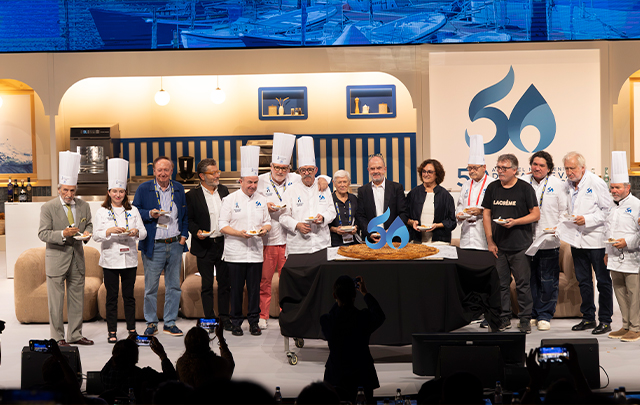
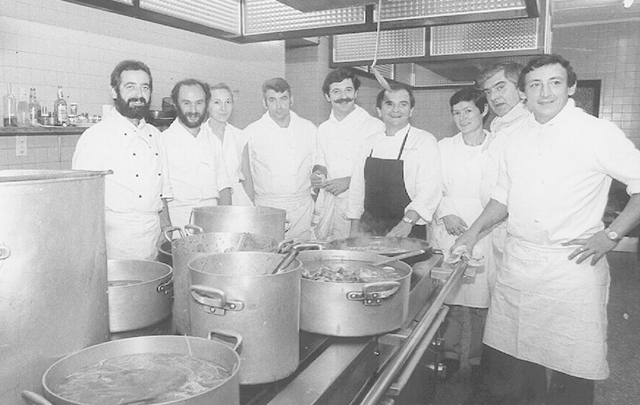
The gathering, held in the Kursaal auditorium, of the founders of the New Basque Cuisine movement and some of the world’s leading chefs to pay tribute to the 50th anniversary of the movement that brought Spanish gastronomy into the modern era, marked the start of an edition of San Sebastián Gastronomika dedicated to commemorating the movement’s legacy and its continued relevance today.
A movement that emerged almost spontaneously and cast a beam of light that guided the path of chefs from subsequent generations across Spain, combining two ingredients that had previously been little used: knowledge and human values. As the director of San Sebastian Gastronomika Euskadi Basque Country, Benjamín Lana, pointed out at the opening of the conference, “freedom is the most important legacy of that group which forever changed a chef’s relationship with their inherited heritage. They discovered that tradition could be a tool rather than a mandate,” he explained.
The story has been told many times, though not so often by the living protagonists themselves: an invitation from Francisco López Canís, founder of the Gourmets Group, to Juan Mari Arzak and Pedro Subijana to attend a lecture by Paul Bocuse in Madrid was the seed of the New Basque Cuisine. San Sebastián Gastronomika has brought together key figures (Pedro Subijana, Tatus Fombellida and Ramón Roteta); chefs who followed in their footsteps (Martín Berasategui, Hilario Arbelaitz, Andoni Luis Aduriz and Elena Arzak); those who took inspiration from them in other countries (Pierre Gagnaire, Gastón Acurio, Michel Troisgros); the driving force behind it all, López Canís; and those who witnessed the metamorphosis of a cuisine rooted in classicism: José Carlos Capel, a food critic, and Benjamín Lana, president of San Sebastián Gastronomika.
“I think the word that best defined the beginning of it all is ‘anarchy’,” recalled Pedro Subijana. “We were a group of young friends; we went to Madrid at the invitation of López Canís for a lecture by Paul Bocuse, and Bocuse—who turned out to be a charming chap—invited us to a series of events in France. From there, everything just happened very naturally,” he explains. Elena Arzak, a little girl at the time, recalled how at home they began to notice the changes in her father’s cooking, but also that the gatherings of those 12 trailblazers (eleven men, chefs, and one woman, Tatus Fombellida, owner and maître d’) were “get-togethers of friends which, on top of that, sometimes ended with them eating the dinner prepared for me and my sister”, she laughed.
Tatus Fombellida, the only woman in the movement and the only front-of-house professional, said that she was “just another member of the group”, but noted that, just as had happened with Nouvelle Cuisine, “the critics forgot to write about the front of house”. Michel Troisgros compared New Basque Cuisine with the movement that his father and other chefs – including Pierre Gagnaire – had spearheaded in France just a few years earlier; Gagnaire confessed that he “fell in love” with what his Basque colleagues were doing.
Gastón Acurio recalled how, whilst he was a law student, he bought a recipe book on New Basque Cuisine. “A year after discovering that book, Juan Mari Arzak appeared on the front page of a newspaper explaining the camaraderie amongst chefs, the humility of going to France to learn, and building on one’s own tradition to forge a new path. That made such an impression on me that, using all my savings, I went to dine at Arzak on my own, dropped out of my law degree and devoted myself to cooking,” he recounted. That spirit of camaraderie, he added, was largely what inspired the subsequent revolution he led in Peru.
Hilario Arbelaitz, younger than the founding group, joined the movement at the invitation of his brother-in-law, who hosted some of the meetings at his restaurant. “At first I felt out of place, but they welcomed me and gave me the encouragement to go to France to learn, because until then I’d only ever known my mother’s cooking,” he explained. “On my return, I began to modernise my mother’s recipes, always taking care not to lose their essence.” Martín Berasategui recalled that it was Luis Irízar who introduced him to the movement, and how, upon discovering just how much he could learn, he began to devote his days off and his holidays to travelling to France to learn. “That’s when I realised I had to train hard if I wanted to be on a par with those stratospheric chefs, and also that you could have a family by blood and a family through your profession.” Berasategui explained that “at a time when nobody wanted to come to Spain, the great French chefs agreed to come and cook at events in Spain, and that also allowed us to bring in journalists who were coming to see them”.
Andoni Luis Aduriz highlighted how, first the pioneers of Nouvelle Cuisine and later those of the New Basque Cuisine, were his mentors. “They instilled values in me, just as chefs like Pierre Gagnaire showed us that a chef’s vision could transcend the kitchen and connect with art,” he said, and added: “All these people here are true dreamers who achieved things when all the circumstances around them were stacked against them,” and he urged us to follow that example in these uncertain times, which “we will not be able to face unless we have a rucksack full of values”. “Behind everything we have heard,” he added, “lies a philosophy on how to face life’s challenges. They have shown the world that a chef can go beyond the kitchen and project some of their dreams and sensibilities onto the dish they are creating. They have thrown the doors wide open for us, and thanks to them I am able to do things that are unheard of.”
José Carlos Capel recalled his first set menu at Arzak alongside Francisco López Canis. “It was a scorpion fish pie, a pasta salad, hake in green sauce, beef cheeks with mashed potato and a cheesecake. Something that today we would in no way consider avant-garde cuisine, but which was so at the time, because everything was wonderfully executed and because those chefs were up against a society that was unwilling to accept that traditional recipes could evolve,” he reflected.
Capel added that the term “traditional cuisine” emerged at the same time as the New Basque Cuisine, exactly fifty years ago. “When they arrived with their innovations, that was when it became necessary to speak in contrast to a cuisine that had not evolved, and that is when people began to talk about traditional cuisine,” he said, concluding that “Basque cuisine still has a very long way to go and much to teach us all”.
Tribute to Martín Berasategui
The debate on New Basque Cuisine was preceded, during the morning session, by a tribute to Martín Berasategui in the main auditorium. A drumming troupe, a choir; the women’s rowing team sponsored by the chef… In short, a stage brimming with friends and symbols of the land that the chef carries around the world filled the venue with warmth, where the happy and deeply moved master enjoyed the embrace of the gastronomic world. He expressed his gratitude by recalling the teachings of his mother and aunt, who introduced him to professional cooking at the age of 15. “They used to tell me there was nothing more beautiful than a trade that consisted of bringing happiness.” He concluded by paying tribute to his teams: “Martín Berasategui is not just me: it’s all of us,” he said, emphasising that “it is today that we are witnessing the finest generation of chefs in history.”
The San Sebastian-born chef’s connection to a more distant land; the island of Tenerife, was the focus of a round-table discussion involving some of the most prominent chefs who have been part of his teams: Erlantz Gorostiza (MB Abama**), Paolo Casagrande (Lasarte by Martín Berasategui***, Barcelona) and David Beltrán and Joseba Lezama, head chefs at Martín Berasategui*** (Lasarte).
Joan Roca champions the vitality of haute cuisine at Gastronomika
On a day dedicated to celebration and remembrance, Gastronomika could not fail to mark the 40th anniversary of one of the world’s most important Spanish restaurants: El Celler de Can Roca*** (Girona). Chef Joan Roca, addressing a packed and rapt audience, outlined the spectacular 40-course menu with which he and his brothers Jordi (pastry chef) and Josep (wine cellar and front of house) are marking this journey.
But before beginning, he wished to make a case for the vitality of haute cuisine in the face of voices such as that of Brujo Verjus, who, upon recently closing his restaurant Table, proclaimed the decline of the format.
“It’s not true that haute cuisine is dead. Who said that?” protested the chef. “El Celler still serves 50 covers per sitting and still has an eleven-month waiting list; and most importantly, guests are left wanting to return. That is the true measure of success; not the stars or the rankings,” he said.
Among yesterday’s standout presentations was that of Aleixandre Couillon (La Marine***, Île de Noirmoutier), who attended San Sebastián as a speaker for the first time (having previously been at Gastronomika as an ordinary delegate), stood out. Accompanied by his daughter Emma and through five dishes, he recounted his 25-year journey towards an ethical and aesthetic symbiosis with his marine environment.
The round-table discussion ‘Terrae: home, wild produce and the future’, in line with the movement of rural chefs that emerged from the Terrae Gran Canaria International Rural Cuisine Conference, brought together Luis Alberto Lera (Lera*, Castroverde de Campos, Zamora), Edorta Lamo (Arrea!*, Campezo, Álava), Xune Andrade (Monte*, San Feliz, Asturias), José Álvarez (La Costa*, El Ejido, Almería) and Josefina Rojo (Gran Canaria Wine Tasting Committee) to discuss generational renewal in the countryside, foraging cuisine and local sourcing.
The event concluded with the presentation of two major awards. The 2026 Pau Albornà Journalism Prize was awarded to the writer and journalist Anya von Bremzen. “Anya helped to show the world that something was happening here that was taking Spanish cuisine to a whole new level,” explained Benjamín Lana, referring to the book *The New Spanish Kitchen*, published by von Bremzen in 2005. In her acceptance speech, the author recalled the impression made on her by those Spanish chefs who were “subverting the foundations of cuisine with tireless rigour, freedom and exploration”.
The critic, writer and wine taster Luis Gutiérrez was awarded the Gueridón de Oro prize. Gutiérrez, one of the most recognised voices in Spanish wine journalism, has been responsible for covering Spanish wines for *The Wine Advocate* since 2013, and is the author of the book *Los nuevos viñadores, una nueva generación de viticultores españoles* (2023).
The auditorium programme concluded with the talk ‘Maturity as a Creative Driving Force’ by Paco Roncero, and with ‘Wine, Bread and Honey’, in which the Georgian chef Guram Baghdoshvili (Chveni, Tbilisi) introduced the audience to some of the key aspects of Georgia’s ancient, exotic and plant-based cuisine, the Guest Country at Gastronomika 2026.
Related news
News
The seven wonders of txipiron
San Sebastian Gastronomika is gearing up to showcase the endless possibilities of a species so deeply rooted in our culture
News
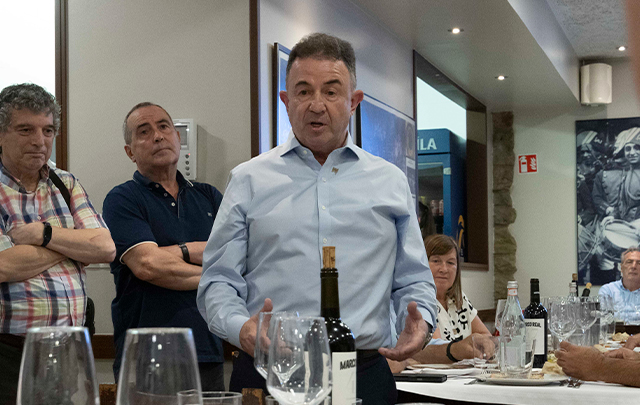
Martintxo received a warm welcome from the gastronomic societies at an intimate tribute
The lunch at the Unión Artesana, held the day before he received the Tribute Award, was a touching occasion for the chef
News
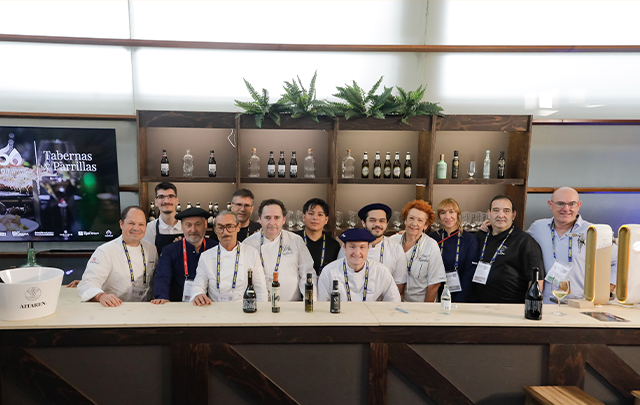
The 3rd Tabernas and Parrillas Forum will explore how the traditional bar is adapting to a new generation of customers
News

The most maritime and experiential edition of Gastronomika celebrates half a century of New Basque Cuisine
News
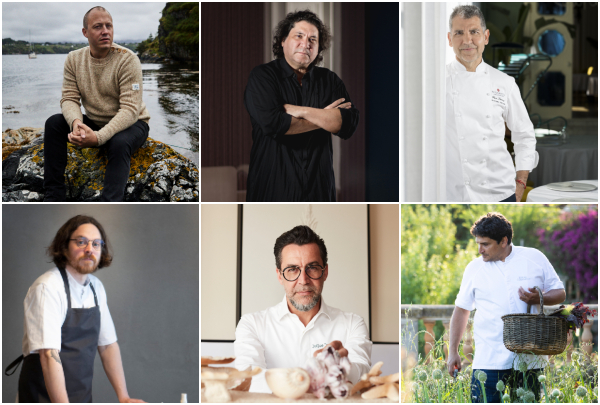
Gastronomika 2026 is broadening its international outlook by welcoming Mark Kurlansky, Mauro Colagreco, Jacopo Ticchi and Poul Andrias Ziska.
The 28th edition of the congress, which will take place from 5 to 7 October under the slogan 'The spark that lit the fire', will feature new voices as part of a programme dedicated to the 50th anniversary of New Basque Cuisine. This year will also see a global cod festival, with chefs from various countries taking part.
News
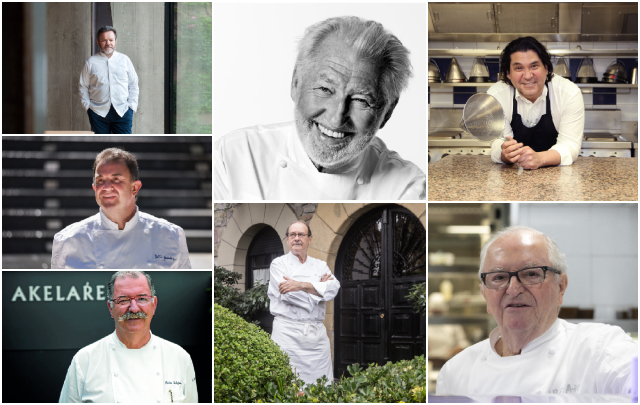
Gastronomika 2026 will pay tribute to the 50th anniversary of New Basque Cuisine
News
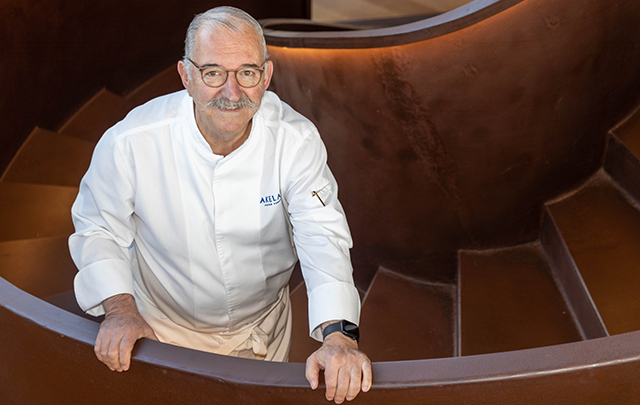
“The movement lives on in the younger generations”
Pedro Subijana is one of the key figures in the birth of the New Basque Cuisine. Fifty years later, at the age of 77, he remains at the helm of Akelarre, and in his legendary restaurant he reflects on those early years when everything came about spontaneously yet with determination
News
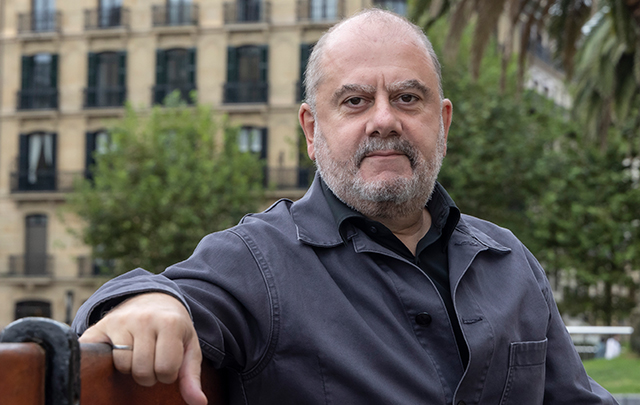
“The greatest value of the New Basque Cuisine was the creation of a collective culinary intelligence”
Benjamín Lana points out that during a difficult period in the Basque Country, everything changed in the kitchens, “where the good people were and those who got along best.” For this reason, he praises “the strength of the team” as the most distinctive feature of a generation that will be honored at San Sebastian Gastronomika
News