News
The most maritime and experiential edition of Gastronomika celebrates half a century of New Basque Cuisine

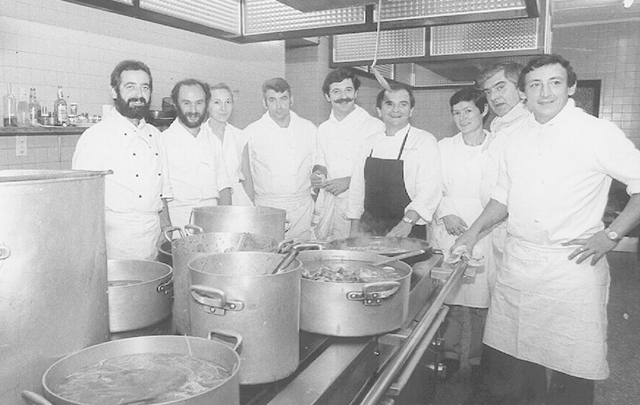
San Sebastian Gastronomika Euskadi Basque Country will once again bring together some of the most influential voices in international gastronomy from October 4 to 7 in the capital of Gipuzkoa, in an edition marked by the celebration of the 50th anniversary of New Basque Cuisine. This year, the conference will focus on the legacy of a movement that transformed Spanish cuisine, opened it up to the world, and laid the groundwork for a new way of understanding innovation, authorship, and collective work. In addition, the San Sebastián conference will host an international cod festival featuring chefs from different countries, pay tribute to Martín Berasategui, and feature Georgia as the guest country.
Half a century later, Gastronomika will bring together several of the key figures from that revolution, which began in 1976 and changed the way the culinary profession was understood, expanded the boundaries of Spanish cuisine, and connected it to the major culinary trends that were transforming Europe and the world—a movement initiated by chefs such as Juan Mari Arzak and Pedro Subijana, alongside Tatus Fombellida, Ramón Roteta, Martín Berasategui, and Hilario Arbelaitz, and carried forward by, among others, Elena Arzak and Andoni Luis Aduriz.
Joining them for this tribute will be key figures from the international scene over the past four decades, such as Pierre Gagnaire and Michel Troisgros, as well as chefs who have explicitly acknowledged the influence of New Basque Cuisine on their own careers. This is the case with Gastón Acurio, a key figure in the expansion and international recognition of Peruvian cuisine. Or Francisco López Canís, who, fifty years ago in Madrid, spearheaded the historic Gastronomy Roundtable that brought together chefs and food connoisseurs with leading figures of French Nouvelle Cuisine—an event that served as the catalyst that led Arzak and Subijana to delve deeper into these new culinary movements. Joining him will be journalist and food critic José Carlos Capel.
But Gastronomika 2026 won’t just look back, as Benjamín Lana, the conference director, announced at the presentation held at the Kofradia – Itsas Etxea space on the San Sebastián waterfront: “This year, Gastronomika will be more experiential, based more on ‘show me’ than on ‘tell me.’ The conference also aims to continue focusing heavily on the sea because we want to remain the best, and to do so, we must excel in areas where others cannot copy us—and the sea is one of them.”
International Cod Conference
Cod will take center stage at a major international conference that will bring together different cultures, techniques, and interpretations of a fish that, for centuries, has connected the Basque Country with other ports and cuisines around the world. But the maritime narrative will go much further: other products deeply linked to Basque culinary identity, such as squid (txipirón) and turbot, will also take center stage in an edition that turns its gaze toward the sea to discuss memory, cuisine, and the future.
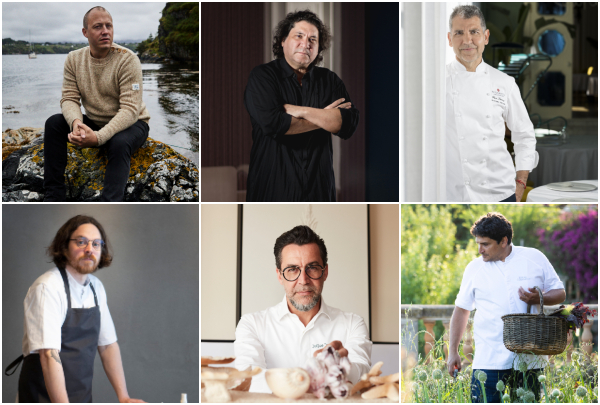
The presence of American writer Mark Kurlansky brings to the conference a historical and cultural perspective deeply connected to the fish that linked the world: cod. Author of books such as *Cod*, *Salt*, and *The Basque History of the World*, Kurlansky has dedicated part of his work to explaining how seemingly specific foods—such as cod or salt, for example—have shaped ways of understanding the world. His connection to Basque culture and cod makes him one of the most versatile voices on the program. The event will also feature chefs Christopher Haatuft from the Lysverket* restaurant in Bergen (Norway), Nigerian chef Omotoyosi Odusanwo (Itán Kitchen, Lagos, Nigeria), and Vítor Adão (Plano, Lisbon, Portugal). These three representatives from countries with a rich cod-fishing tradition—one of the central themes of this edition of Gastronomika—highlight very different relationships with the fish: the Atlantic perspective of West Africa; Norway and its tradition of preserving cod; and Portugal and its vast cod-fishing culture.
The international lineup for this edition extends beyond cod and is led by the three-Michelin-starred French chef Alexandre Couillon (La Marine***, Noirmoutier Island), one of the world’s leading figures in seafood cuisine.
Additionally, Jacopo Ticchi will be joining us from Rimini (Italy), chef at Da Lucio*, one of the most distinctive voices in the new wave of Italian seafood cuisine. His work has brought to the forefront the comprehensive use of every part of the fish and a contemporary interpretation of the Adriatic that breaks away from the classic codes of the seaside trattoria. Also joining the lineup is Mauro Colagreco, chef at Mirazur*** (Menton, France), a restaurant built around an ecosystem: its own vegetable gardens, the lunar calendar, biodiversity, and cuisine that bridges the borders of France, Italy, and Colagreco’s Argentine heritage. The international lineup is rounded out by Poul Andrias Ziska, at the helm of Paz** in Tórshavn, Faroe Islands. His culinary vision stems from an extreme landscape where traditional techniques and the natural environment are woven into the fabric of his culinary DNA.
Georgia, the guest country at Gastronomika 2026, emerges as one of Europe’s great culinary traditions yet to be discovered. Forged over centuries at the crossroads of East and West and shaped by the trade routes of the ancient Silk Road, its cuisine combines a deeply rooted identity with surprising modernity: an abundance of vegetables, fermentation, resourcefulness, and an approach to dining that feels fully contemporary today.
San Sebastian Gastronomika 2026 features an outstanding national lineup. Joan Roca, from El Celler de Can Roca***, will return as one of the central figures of contemporary Spanish cuisine. The young chef Iris Jordán, from Ansils* in Anciles, Huesca, will bring to the Kursaal the vitality of Pyrenean cuisine, which has found its own unique form of expression in the mountains of the Benasque Valley. Also in attendance will be Paco Pérez, whose career at Miramar** in Llançà has shaped a Mediterranean culinary vision deeply connected to the sea of the Costa Brava; Paco Roncero, from his Madrid restaurant at the Casino de Madrid; Francis Paniego, representing contemporary La Rioja cuisine at El Portal de Echaurren** in Ezcaray; Josean Alija and his delicate cuisine at Nerua* (Bilbao); and Quique Dacosta, who, from Dénia, has made the Mediterranean the conceptual foundation of one of Europe’s great restaurants.
Other notable names on the program include Paolo Casagrande (Lasarte***), Luis Lera (Lera*), Edorta Lamo (Arrea!*), Xune Andrade (Monte*), Javier Díaz (Alhambra), Beñat Ormaetxea (Jauregibarria), Pablo Loureiro (Casa Urola), Jon Gil Zárate (Ahantz), John Regefalk (Goe Tech), Eneko Izcue (BCC), David Cordobés (Basque Culinary Center), and Juan Azorín (Estirpe).
Among the highlights of this year’s event, San Sebastián Gastronomika will also feature a scene steeped in symbolism: the arrival in port of the San Juan, a replica of a 16th-century Basque whaling ship rebuilt by the Albaola shipyard, carrying a cargo of dried cod that will connect the conference to the Basque Country’s maritime and commercial heritage, transforming the tribute to the product into an experience open to the city and a bridge between history and gastronomy.
Cutlery will take center stage like never before at San Sebastian Gastronomika this year as one of the essential trades that underpin haute cuisine. The conference will spotlight the knife not only as a tool, but as a precision instrument, a handcrafted object, and an extension of the chef’s hand.
Awards and Taverns
Without forgetting the traditional recognitions for industry professionals, San Sebastian Gastronomika Euskadi Basque Country will honor Martín Berasategui this year with the Tribute Award for his pivotal role in the international promotion of Basque cuisine. The conference will also award the Gueridón de Oro to wine critic Luis Gutiérrez, one of the most influential voices in the world of Spanish wine, and the Pau Albornà i Torras Gastronomic Journalism Award to Anya von Bremzen, a Russian-American journalist and writer who has made a decisive contribution to promoting Spanish cuisine on the international stage.
Beyond the main auditorium, the alternative stage dedicated to taverns will evolve starting this year toward a more experiential format and will be renamed “Tabernas y Parrillas.” Its program will expand to include tastings and educational sessions. Among these highlights will be the presence of the Arregi cousins, Elkano and Kaia-Kaipe, who will appear together for the first time and reveal the secrets of their famous grilled turbot in a live demonstration. This space will kick off on Sunday at the Kursaal with an event dedicated to txipiron, featuring a tasting of seven different preparations. In addition, during the congress, it will host an event to highlight the Ostatus, organized in collaboration with the Provincial Council of Gipuzkoa. This year, the congress will also feature the Gastronomika Off Young Talent Gathering, in which 50 young chefs from across the Iberian Peninsula will participate, 50 years after the emergence of the New Basque Cuisine. This event is sponsored by Alimentos de España and designed to share ideas, forge connections, and take the pulse of new trends in gastronomy. It’s a more accessible and participatory space where the future of the sector will have its own voice.
Gastronomika 2026 will also host a lunch as part of the Cooking Innovation program, where Quique Dacosta and his team will explore the connection between business innovation and haute cuisine. And on Tuesday night, it will host a one-of-a-kind dinner for approximately 50 guests, “Masters&Comanders,” conceived as an exceptional gastronomic gathering centered on three elements: the product, the fire, and the wine. For one night, the initiative brings together the grills of La Cúpula de El Capricho (No. 1 on the World’s 101 Best Steak Restaurants 2026 list), Laia Erretegia (No. 3) and Julián de Tolosa (No. 6)—three establishments with their own distinct personalities but united by a shared philosophy: the pursuit of excellence in meat, product selection, and mastery of the grill. The goal is not to offer a conventional dinner, but to create a once-in-a-lifetime gastronomic experience, in which three of the world’s top specialists in meat and fire will showcase their skills before a very small group of diners.
During this edition, a pintxo will also be created to pay tribute to the 50th anniversary of the New Basque Cuisine, with the support of the Tenerife Island Council and the Pintxo Institute. And in collaboration with Fomento San Sebastián, two activities will be highlighted: a disruptive lunch-and-lecture with Quique Dacosta and his team as part of the Cooking Innovation program, to discuss cuisine as an operating system for innovation. And another post-meal gathering to highlight some of the emerging chefs in San Sebastián’s new culinary scene.
With an edition that looks to its roots to continue moving forward, Gastronomika will once again bring together memory, talent, produce, reflection, and emotion. And it will remind us that sometimes a single spark is enough to ignite a change that will never be extinguished.
Norberto Emazabel, president of the Gipuzkoa Fishermen’s Federation, opened the Gastronomika launch event. Following him, Amaia Barredo, the Basque Government’s Minister of Food, Rural Development, Agriculture, and Fisheries, sought to highlight “everything that goes into the pleasure we experience when we go out to eat.” She believes that “the collective knowledge of the gastronomy sector is one of our greatest strengths.” That is why she wanted to highlight “the people who have put gastronomy on the map.”
Azahara Domínguez, Provincial Councilor for Mobility, Tourism, and Land Use Planning for the Gipuzkoa Provincial Council, explained how “the market, local products, and tradition were the starting point for the transformation that propelled Gipuzkoa’s gastronomy to stardom” and expressed her gratitude “to those of you who have kept it in such a privileged position.” She also noted that “our gastronomy is also found in the villages, in the bars, and in the ostatus.”
She considers it “essential to keep alive the spirit of that revolution”—the New Basque Cuisine—“and to look ahead to remain at the forefront without giving up what sets us apart from other places.”
The mayor of San Sebastián, Jon Insausti, closed the proceedings by urging everyone to “embrace the legacy” of the New Basque Cuisine “and once again conquer the decades ahead. Events like this remind us that we must continue to delve deeper into our own traditions and identity.”
Related news
News
The 3rd Tabernas and Parrillas Forum will explore how the traditional bar is adapting to a new generation of customers
News
Gastronomika 2026 is broadening its international outlook by welcoming Mark Kurlansky, Mauro Colagreco, Jacopo Ticchi and Poul Andrias Ziska.
The 28th edition of the congress, which will take place from 5 to 7 October under the slogan 'The spark that lit the fire', will feature new voices as part of a programme dedicated to the 50th anniversary of New Basque Cuisine. This year will also see a global cod festival, with chefs from various countries taking part.
News
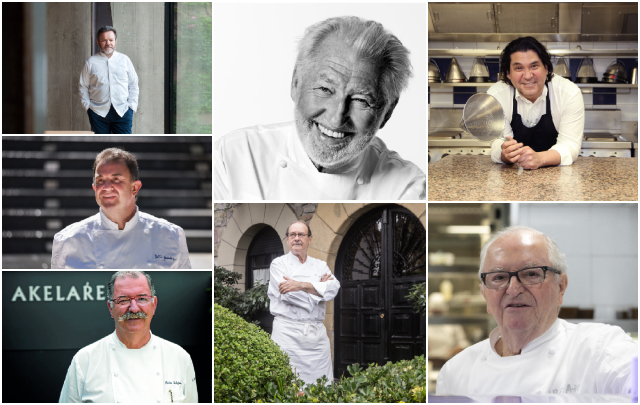
Gastronomika 2026 will pay tribute to the 50th anniversary of New Basque Cuisine
News
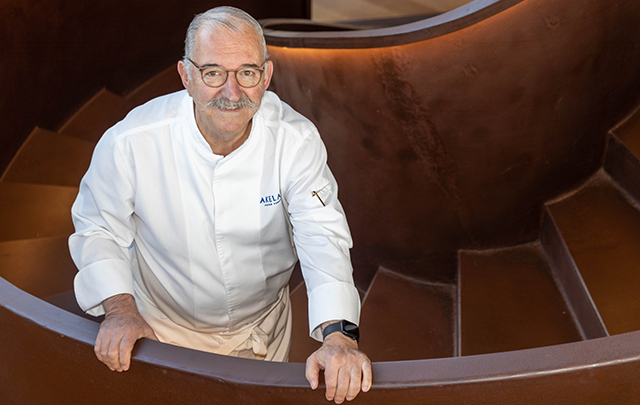
“The movement lives on in the younger generations”
Pedro Subijana is one of the key figures in the birth of the New Basque Cuisine. Fifty years later, at the age of 77, he remains at the helm of Akelarre, and in his legendary restaurant he reflects on those early years when everything came about spontaneously yet with determination
News
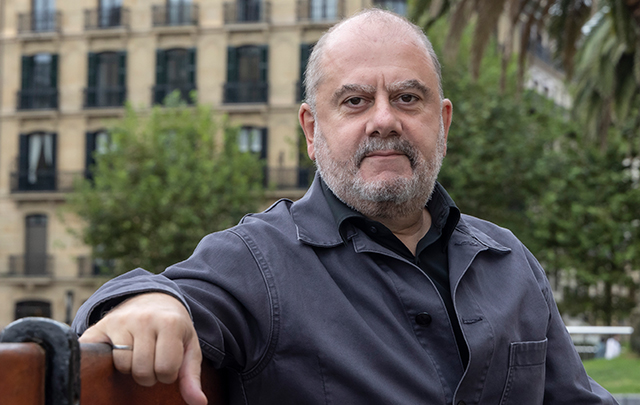
“The greatest value of the New Basque Cuisine was the creation of a collective culinary intelligence”
Benjamín Lana points out that during a difficult period in the Basque Country, everything changed in the kitchens, “where the good people were and those who got along best.” For this reason, he praises “the strength of the team” as the most distinctive feature of a generation that will be honored at San Sebastian Gastronomika
News