News
The 3rd Tabernas and Parrillas Forum will explore how the traditional bar is adapting to a new generation of customers
The tavern changes, but it does not disappear. The bar, the fire, pintxos, tapas, stews, the produce, the social gathering and the hospitality continue to form part of a way of understanding gastronomy that spans generations. The 3rd Taverns and Grills Forum at San Sebastian Gastronomika Euskadi Basque Country, to be held on 5 and 6 October at the Kursaal under the slogan “From the bar of yesteryear to the bar of today”, will focus on this ability to evolve without losing what makes each establishment recognisable.
The forum will shine a spotlight on some of the formats that are redefining tavern culture: from historic bars that remain part of everyday life in their cities to new concepts driven by haute cuisine chefs; from the grills of Getaria to the ‘ostatu’ in the interior of Gipuzkoa; and encompassing new forms of hospitality, artisan cheese, produce from the Canary Islands and the culture of Iberian ham.
The programme is underpinned by a fundamental question: how can deeply rooted establishments be modernised without losing what explains their success and makes them recognisable? The forum will kick off on 5 October with the round-table discussion ‘Bars of Gipuzkoa: roots that endure’, which will bring together four establishments with different histories and circumstances to analyse how the traditional bar is sustained and brought up to date.
From San Sebastián’s Old Town will come El Vallés, a historic landmark of the bar scene and of the city’s pintxo history itself, and Bar Martínez, one of those establishments that have helped turn San Sebastián’s pintxo trail into an international attraction. The discussion will then move inland to Baratze Taberna in Eibar. Housed in a former mechanical workshop, it preserves traces of the industrial past of a town characterised by its capacity for transformation, incorporating them into a well-curated, contemporary urban tavern. An example of how to modernise a business without erasing the place from which it originated. Rounding off the panel is David Estévez (Guria Taberna, Hernani), an establishment closely linked to everyday life in Hernani, which exemplifies the enduring relevance of the bar as a space for meeting and socialising.
Michelin-starred chefs put a new spin on the tavern
The panel ‘The tavern: a new twist’ will show how some chefs renowned for haute cuisine are also embracing more everyday, informal formats that are open to a diverse audience.
Francis Paniego will discuss his tavern concept in the centre of Logroño, Tondeluna, built on simplicity, an unpretentious ambience and a menu of traditional dishes that retains some recognisable nods to Echaurren. From El Ejido, José Álvarez will present La Barra de La Costa, a neo-tavern conceived almost as a 360° establishment. Breakfasts as unique as a red prawn omelette, tapas, dishes to share, more complex creations, music, cocktails and after-work drinks all coexist in a venue that broadens the uses and opening hours of the traditional tavern.
For his part, Sergio Ortiz de Zárate will explain the phenomenon of La Taberna de Zárate, in Bilbao, where stews, tapas and familiar recipes are underpinned by the knowledge and technique of a Michelin-starred chef. His omelettes – of which he makes over 180 a day – have become the standout feature of a menu that looks back to traditional dishes.
Three different projects all pointing in the same direction: the tavern can evolve in terms of format, technique and business model without losing its down-to-earth feel or abandoning traditional recipes.
Georgia: a tavern open all day
The programme will then move on to Georgia, led by Nino Kiltava, head of K’era in Madrid. “Georgia all day: a new tavern culture” will present a contemporary take on hospitality: a venue open all day for eating, drinking and socialising. A large traditional oven takes centre stage in the establishment, and the breads and pastries made daily form the backbone of a menu that changes throughout the day: breakfasts with freshly baked bread and speciality coffee, brunch and afternoon drinks with signature cocktails and vinyl DJ sets. The Georgian eatery thus becomes an all-day venue capable of welcoming guests at different times and for different purposes.
The programme on the 5th will conclude with the presentation of “Artesanos del queso” (Cheese Artisans), by Ignacio Medina, Andoni Luis Aduriz and José Carlos Capel. Medina’s new book takes readers on a journey through 23 Spanish cheese-making workshops that are pushing the boundaries of the craft through knowledge and creativity. The session will feature Latxa sheep’s-milk cheeses from Elkano 1 Gaztagune in Aia, and a selection of blue cheeses from Galicia, Castile-La Mancha, Navarre, Asturias and Castile and León.
One of the forum’s most unique events will take place on the morning of Tuesday 6 October. Aitor Arregi, from Elkano*, and Igor Arregi, from Kaia-Kaipe, will share the stage for the first time to reveal the secrets of turbot and the grill. The two cousins will bring to the Kursaal the approach to preparing fish that has made Getaria an international benchmark. They will discuss fire, turbot, technique and family tradition to explain a cooking method developed and perfected over generations. The session will shed light on why grilling has become one of the defining ways of cooking and understanding fish in this coastal town, and will be rounded off with a turbot tasting for attendees.
“Ostatus, the cuisine that keeps the town alive”, an exploration of Gipuzkoa’s network of ostatu and its gastronomic and social significance, will be presented by Azahara Domínguez, Provincial Councillor for Mobility, Tourism and Spatial Planning for Gipuzkoa, alongside Aiert Izagirre, from Zeraingo Ostatua (Zerain, Gipuzkoa); and Koldo Butrón and Mohamed Boujadannide, from Ostatu de Leaburu. Much more than just places to eat, these establishments have traditionally served as spaces for socialising and hospitality, closely linked to the daily life of the villages. The session will champion unpretentious cuisine, based on locally sourced produce and recipes passed down through the generations, and will analyse how these businesses help to sustain activity and social ties in rural areas. The presentation will feature a tasting of dishes from the Ostatu network.
From Iberian ham to the Canarian landscape
The afternoon will continue with a tasting of Solera Carrasco 2026 100% Iberian Acorn-fed Ham, led by David de Jorge and Guillermo Carrasco. The experience will showcase a limited edition that encapsulates five generations of the Carrasco family’s work and will include a surprise: the launch of new packaging for the product. The closing event will come from the Canary Islands. Ayoze Valido, from El Bejeque, will lead “Native Breeds and Local Produce”, a journey through Canarian produce and landscape via various dishes featuring Canarian black pig and Canarian beef.
The 3rd Tabernas and Parrillas Forum will thus map out how some of the most recognisable formats of our gastronomy are changing. From the neighbourhood bar to the ‘neotaberna’; from the rural ‘ostatu’ to the all-day eatery; from the tortilla and stew to grilled fish; from artisan cheese to native breeds. Different models, generations and ways of working that share the same challenge: to remain relevant whilst staying recognisable.
Related news
News

The most maritime and experiential edition of Gastronomika celebrates half a century of New Basque Cuisine
News
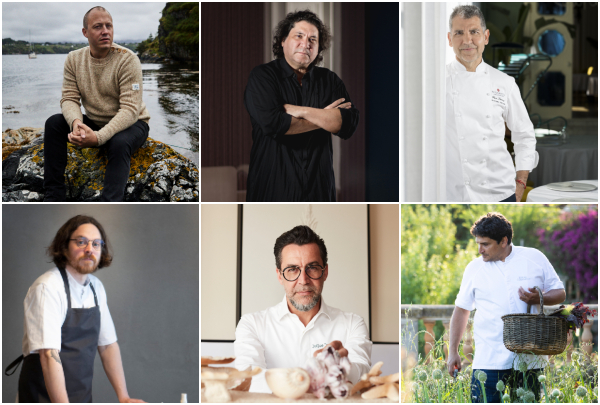
Gastronomika 2026 is broadening its international outlook by welcoming Mark Kurlansky, Mauro Colagreco, Jacopo Ticchi and Poul Andrias Ziska.
The 28th edition of the congress, which will take place from 5 to 7 October under the slogan 'The spark that lit the fire', will feature new voices as part of a programme dedicated to the 50th anniversary of New Basque Cuisine. This year will also see a global cod festival, with chefs from various countries taking part.
News
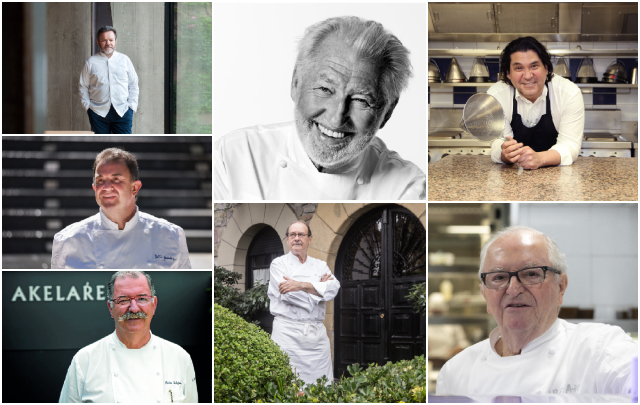
Gastronomika 2026 will pay tribute to the 50th anniversary of New Basque Cuisine
News
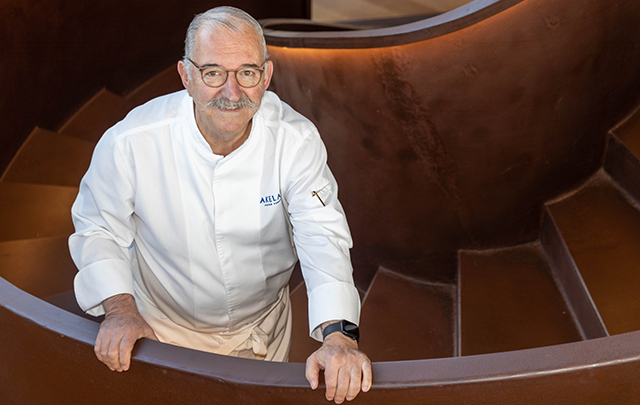
“The movement lives on in the younger generations”
Pedro Subijana is one of the key figures in the birth of the New Basque Cuisine. Fifty years later, at the age of 77, he remains at the helm of Akelarre, and in his legendary restaurant he reflects on those early years when everything came about spontaneously yet with determination
News
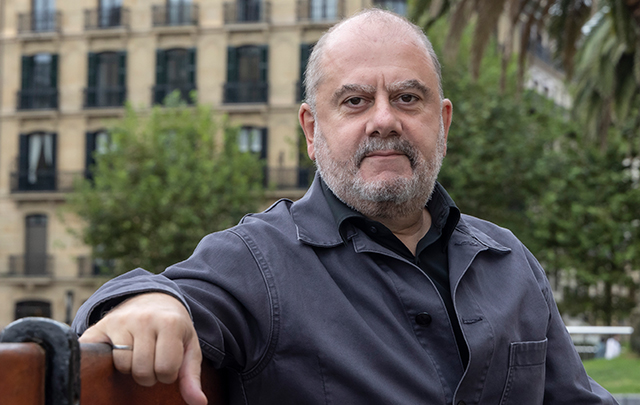
“The greatest value of the New Basque Cuisine was the creation of a collective culinary intelligence”
Benjamín Lana points out that during a difficult period in the Basque Country, everything changed in the kitchens, “where the good people were and those who got along best.” For this reason, he praises “the strength of the team” as the most distinctive feature of a generation that will be honored at San Sebastian Gastronomika
News